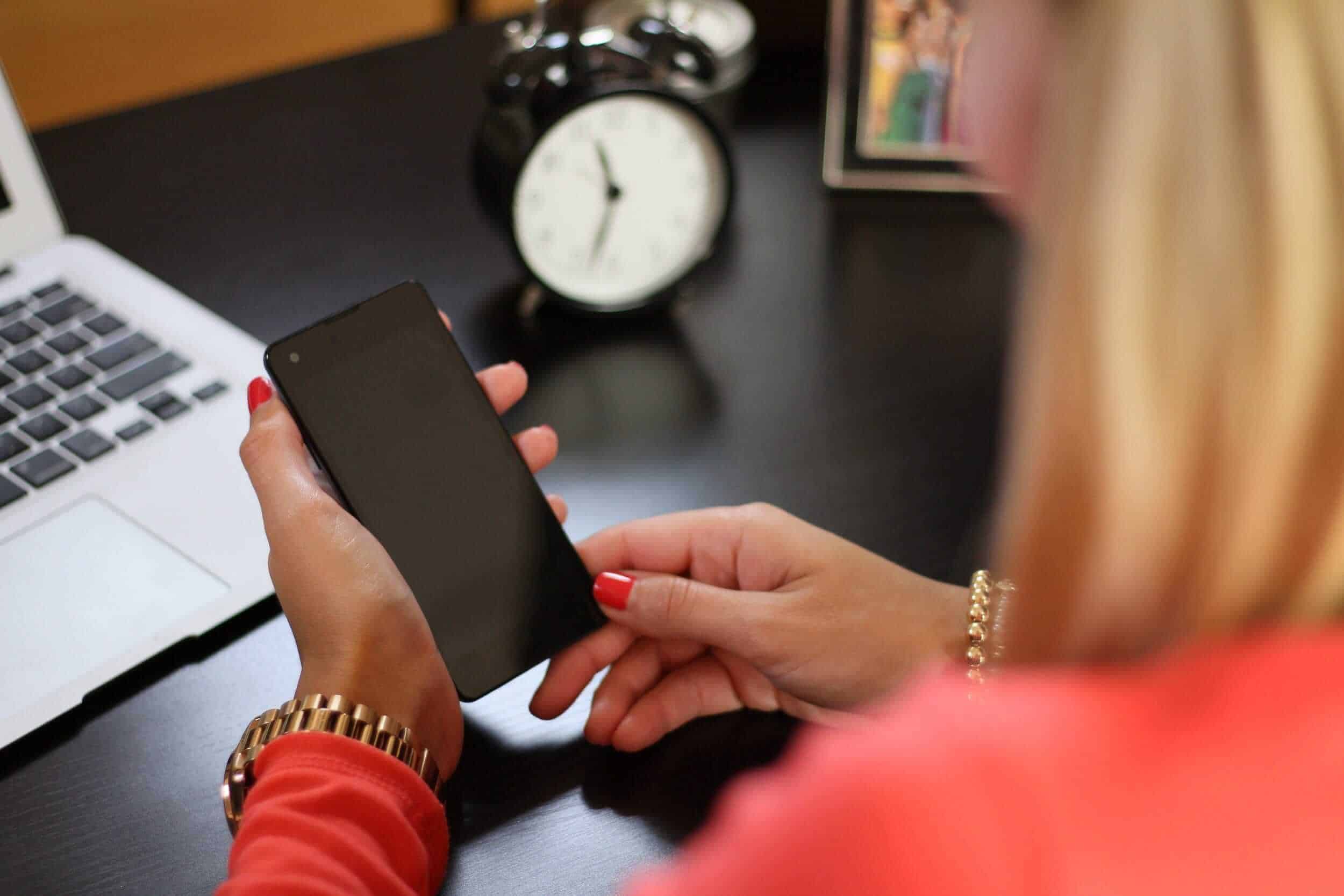
You sit down to work. You open the document. You read the first sentence. And then — without any conscious decision, without any awareness of the transition — you’re on your phone. Not because something happened. Not because someone called. Because your hand moved before your brain could intervene, and now you’re reading about something that has no connection to anything you care about, and four minutes have passed, and when you look up, the document is still on the first sentence.
This isn’t a discipline failure. It’s an environment failure. Your attention is being harvested by systems that are better engineered than your willpower, and the solution isn’t to be stronger. It’s to be smarter about the conditions you create for yourself.
Your Phone Is Not a Tool. It’s a Slot Machine.
Former Google design ethicist Tristan Harris described the smartphone as a slot machine in your pocket. The comparison is precise. Every notification, every refresh, every pull-to-update gesture is a variable reward mechanism — the exact same behavioral pattern that makes gambling addictive. Sometimes you pull and there’s something interesting. Usually there isn’t. But the uncertainty keeps you pulling.
You can’t beat this with willpower any more than you can beat a casino with willpower. The house always wins because the game is designed for the house. The only winning move is to change the game.
Practical translation: during any period where you need to focus, your phone goes in another room. Not on silent. Not face-down on the desk. In another room. Out of reach, out of sight, out of the part of your brain that’s constantly monitoring it for stimulation. This single change, done consistently, will increase your productive output more than any app, technique, or productivity system ever will.
The Myth of Multitasking (Again, Louder)
Your brain cannot do two cognitively demanding tasks simultaneously. This is not an opinion. It’s neuroscience. What you experience as “multitasking” is actually rapid task-switching, and every switch costs you. Researchers at the University of California, Irvine found that after an interruption, it takes an average of twenty-three minutes to return to the original task at the same level of depth.
Twenty-three minutes. Per interruption. If you check your email four times during a focused work session, you’ve lost ninety-two minutes — not to the email itself, but to the recovery. The email might have taken two minutes. The attention cost was twenty-three. And you never noticed because the cost is invisible.
Block your time. One task per block. Close everything else. The email can wait. The message can wait. The news can wait. Whatever you’re afraid of missing while you focus will still be there when you resurface. It always is.
Design Your Environment for Focus
Most people try to focus in environments designed for distraction. Open-plan offices. Kitchens with ambient noise. Living rooms with televisions. Then they blame themselves when concentration fails.
If you can’t change your environment, change what you can within it. Noise-cancelling headphones, even without music, create a psychological boundary. A “do not disturb” sign — literal or digital — signals to others that your attention is temporarily unavailable. A clean desk removes visual stimuli that compete with the task. A browser extension that blocks social media during work hours removes the option entirely.
None of these require permission. All of them require the belief that your attention is worth protecting. And it is. Your attention is, arguably, the single most valuable resource you possess. It’s what you build things with, solve problems with, connect with other people with. And you’re giving it away, for free, to every notification that buzzes and every tab that beckons. Reclaiming it is not selfishness. It’s self-defense.
The Two-Minute Rule (Borrowed and Modified)
David Allen’s Getting Things Done methodology includes a useful principle: if a task takes less than two minutes, do it immediately. Don’t add it to a list. Don’t schedule it. Just do it. The overhead of tracking it exceeds the effort of completing it.
For focus, I’ve adapted this into a different rule: if the distraction can wait two minutes, it can wait two hours. The urge to check your phone, to peek at your inbox, to Google something unrelated — these urges feel urgent in the moment. They’re not. They’re impulses, and impulses fade if you don’t act on them. Wait two minutes. The urge will pass. And you’ll still be inside your work instead of starting over from scratch.
The Deep Work Protocol
Cal Newport coined the term “deep work” to describe the state of sustained, distraction-free concentration on a cognitively demanding task. It’s the state where your best thinking happens, your most creative ideas emerge, and your most impactful output gets produced. And most people experience it for less than an hour per day, if at all.
The protocol is simple. Block ninety minutes. Remove all distractions — phone, email, social media, noise. Work on one thing. When the ninety minutes are up, take a genuine break — walk, stretch, make coffee, look out a window. Then, if you have the energy, do another block.
Two ninety-minute deep work sessions per day will produce more meaningful output than eight hours of distracted, interrupted, shallow work. This sounds like an exaggeration. Try it for one week and compare your output. The difference is startling.
What You’re Actually Afraid Of
Here’s the uncomfortable truth buried under all the distraction: sometimes the phone isn’t the problem. You’re reaching for it because the work is hard, or boring, or scary. The document you’re writing might be terrible. The project might fail. The thing you’re creating might not be good enough. And rather than sit with that discomfort, you escape into the infinite scroll.
Distraction is, often, avoidance in disguise. And the cure for avoidance isn’t a better app-blocker. It’s the willingness to sit with difficulty. To be bored for ten minutes until the work starts flowing. To write a bad first paragraph knowing you can fix it later. To face the blank page, the unsolved problem, the uncomfortable task — and stay.
That’s the real skill. Not focus. Tolerance. The willingness to remain present with something that isn’t immediately rewarding, long enough for the reward to arrive. Everything else — the phone in another room, the blocked websites, the noise-cancelling headphones — is just scaffolding to support that core capacity.
Build the scaffolding. But know that underneath it, what you’re really building is the ability to stay. And that ability, once developed, changes everything.