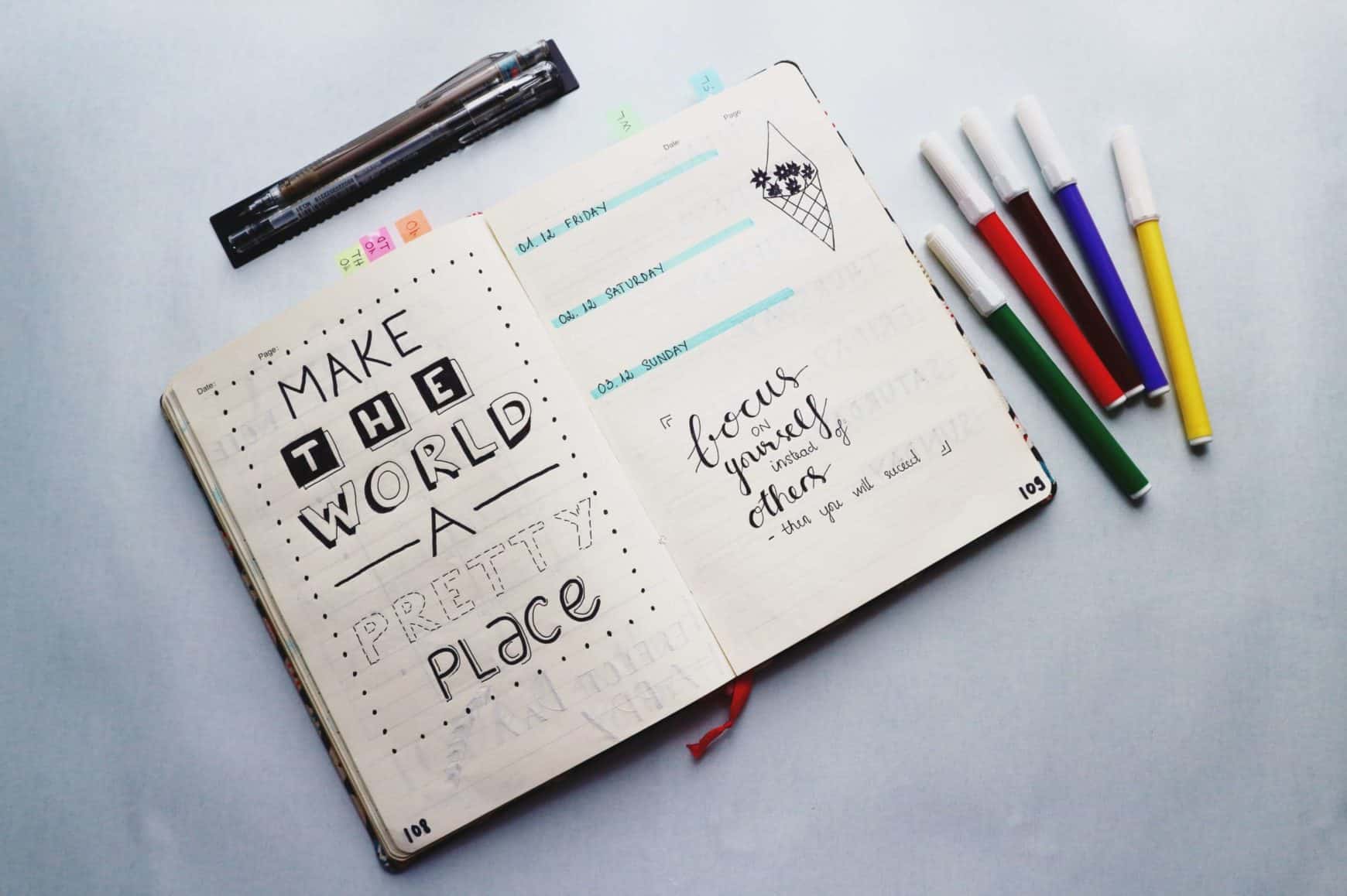
The planner graveyard is one of the most universal experiences in adult life. You buy one in January, fill it in religiously for three weeks, miss a day, miss a week, feel guilty every time you see it, and eventually bury it in a drawer where it joins last year’s planner, which joined the year before’s, in an archaeological record of abandoned good intentions.
The problem isn’t your discipline. It’s the planner. Or more precisely, it’s the mismatch between how the planner wants you to think and how your brain actually works. A planner that fits your cognitive style is a tool that amplifies your productivity. A planner that doesn’t is a guilt generator that costs thirty dollars and occupies shelf space until you throw it away.
Here’s how to find the one that actually works for you.
The Format Question: Daily, Weekly, or Monthly
This is the most consequential choice, and most people make it based on what looks appealing in the store rather than how they actually process time.
Daily planners are for people who manage many small tasks and appointments throughout the day. If your work involves fifteen-minute time blocks, client calls, and granular scheduling, a daily page gives you the resolution you need. If your days are less structured, a daily planner will have far more space than you use, which feels wasteful and produces guilt.
Weekly planners are the most versatile format and the right choice for most people. A week-at-a-glance layout lets you see the shape of your week, balance commitments across days, and plan at a granularity that’s detailed enough to be useful without being so detailed that it becomes tedious. If you’re unsure which format to choose, start with weekly.
Monthly planners are for people who think in broad strokes — project deadlines, travel dates, major appointments. If you don’t have many daily tasks but need to track commitments across a longer timeline, monthly is sufficient. Most people who try monthly find they need a secondary system for daily tasks, which defeats the single-system simplicity.
Paper vs. Digital: The Honest Comparison
The paper vs. digital debate generates surprisingly passionate opinions for something that’s essentially a scheduling choice. Here’s what the research actually supports.
Paper planners produce better retention and deeper processing. The act of handwriting activates different neural pathways than typing — a finding confirmed by multiple studies, including research from Princeton and UCLA showing that students who take notes by hand retain information better than those who type. Writing a task or appointment by hand makes you more likely to remember it, even if you never look at the planner again.
Digital planners are better at recurring events, reminders, sharing, and search. If you need to coordinate with other people, set automatic reminders, or quickly find something you wrote three months ago, digital wins. Paper can’t buzz your phone ten minutes before a meeting.
The practical answer for most people is both. A paper planner for daily and weekly planning — the thinking layer, where you process priorities and intentions. A digital calendar for appointments and recurring events — the logistics layer, where precision and automation matter. The paper handles the “what should I focus on?” question. The digital handles the “when is it happening?” question. They serve different cognitive functions, and forcing one tool to do both usually means neither works well.
Size Matters More Than You Think
The planner that lives in your desk drawer gets used less than the planner that lives in your bag. And the planner that’s too big for your bag gets abandoned entirely.
A5 (roughly 5.5 x 8.5 inches) is the sweet spot for most people. Large enough to write comfortably, small enough to carry. A4 (full page) is better for desk use but impractical for portability. Pocket size is great for carrying but too small for meaningful planning unless you write very small and think very concisely.
Before you buy, answer this: where will this planner physically be when you need it? If the answer is “my desk,” size doesn’t matter much. If the answer is “with me,” it needs to fit in whatever you carry daily. The most beautifully designed planner in the world is useless if it’s at home when you need it at work.
The Features That Matter (And the Ones That Don’t)
Matters: quality paper that doesn’t bleed through with your preferred pen. Lay-flat binding so you can write without holding the book open. A layout that matches your format preference. Enough structure to be useful, enough blank space to be flexible.
Doesn’t matter: inspirational quotes at the top of each page. Color-coded sections. Habit trackers you’ll fill in for two weeks and ignore for fifty. Goal-setting pages at the front that feel productive to fill in and never get revisited. Monthly reflection prompts. These features feel valuable when you’re browsing planners. They’re invisible by March.
The best planners are simple. They give you space to write what needs doing, when it needs doing, and not much else. The complexity should live in your thinking, not in the layout. A planner that tries to be a journal, a goal-tracker, a habit monitor, a reflection tool, and a scheduling system simultaneously does none of those things well and all of them half-heartedly.
Why Most Planners Get Abandoned (And How to Prevent It)
The abandonment happens for one of three reasons. The format is wrong (too detailed or not detailed enough for how you think). The planner isn’t physically available when you need it (too big, lives on a shelf). Or — most commonly — you miss a few days and interpret that as failure rather than as a normal fluctuation in any ongoing practice.
The fix for the third one is the same as the fix for any habit: never miss twice. You missed Wednesday. Don’t try to retroactively fill in Wednesday. Just open the planner on Thursday and continue. The value of a planner is not in its completeness. It’s in its availability. A planner with gaps is still a functional tool. A planner abandoned in a drawer is not.
Choose the right format. Choose the right size. Keep it simple. Keep it with you. And when you miss a day — and you will — open it the next day and keep going. The planner that serves the year isn’t the most beautiful one or the most expensive one. It’s the one that’s still open on your desk in November.