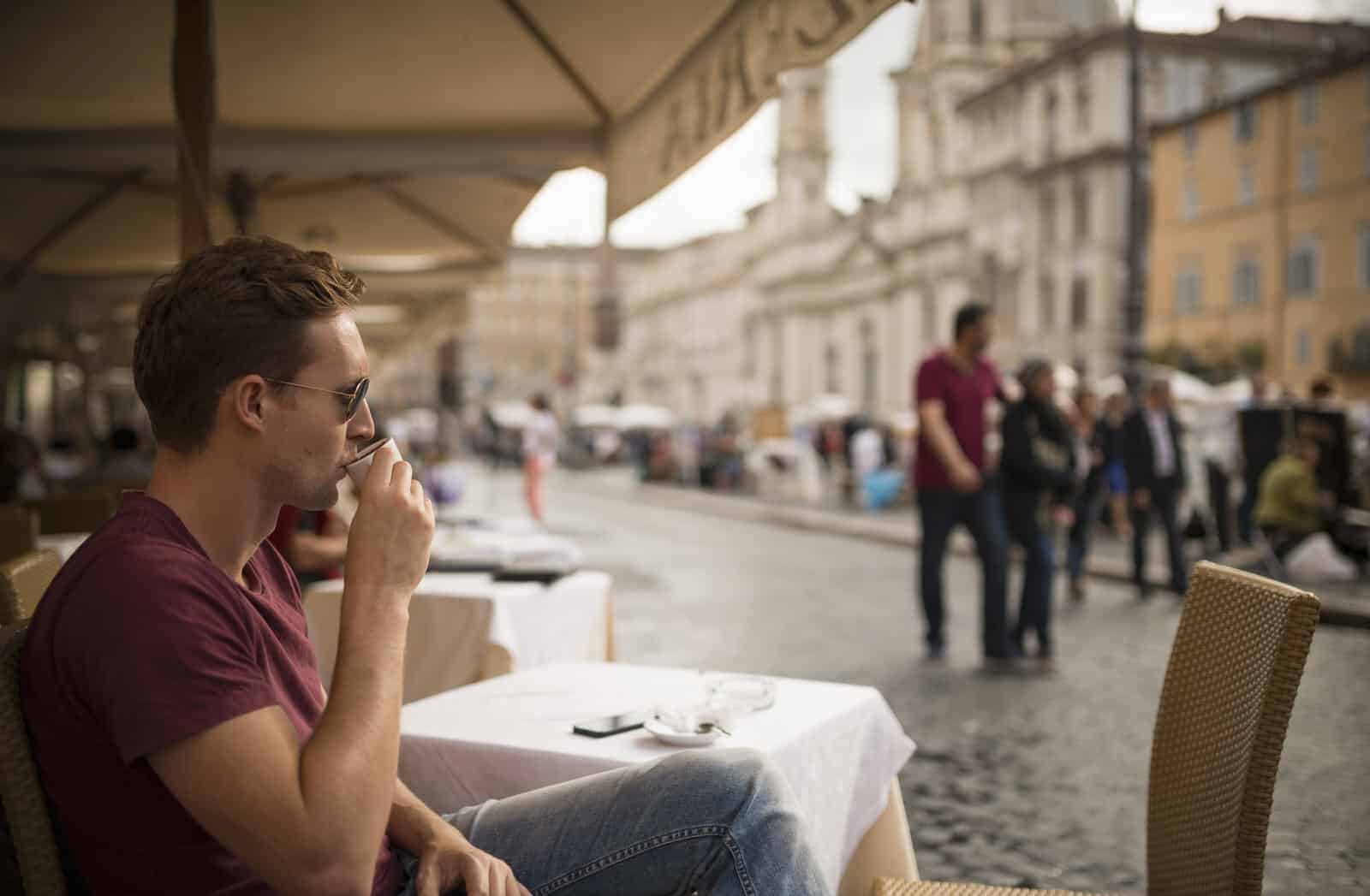
There’s a specific kind of homesickness that hits at unexpected moments. Not when you’re lost or struggling — those moments demand too much attention for nostalgia. It hits when things are going fine. You’re in a café, reading, comfortable, and suddenly a smell reaches you — a bakery, a laundry, a street after rain — and it’s so close to something from home that your chest tightens before your brain catches up.
That’s not weakness. That’s your nervous system telling you it’s wired for belonging. Humans aren’t designed to be perpetually rootless. We need anchors: familiar faces, predictable rhythms, spaces that feel ours. The question for anyone who moves frequently, travels extensively, or relocates to a new country isn’t how to eliminate the need for belonging. It’s how to satisfy it faster, in places where nothing is familiar yet.
Build Routines Before Building Relationships
This sounds backward. Most relocation advice says “make friends immediately.” Friends are important — we’ll get there — but the fastest way to feel at home in a new city isn’t people. It’s rhythm.
Find a coffee shop and go there every morning. Take the same route to work. Discover a grocery store and learn its layout. Identify a park, a bench, a corner that you visit regularly. These are micro-anchors — predictable points in an unpredictable landscape — and they do for your nervous system what a heartbeat does for a newborn: they signal safety through repetition.
Within two weeks of establishing three or four daily rituals in a new city, the background anxiety of unfamiliarity drops measurably. You stop feeling like a tourist and start feeling like a resident. Not because you’ve been accepted by the city. Because you’ve claimed small pieces of it as yours.
Learn the Neighborhood, Not the City
New cities are overwhelming when approached as wholes. Don’t try to understand Berlin, or Buenos Aires, or Bangkok. Understand your block. Then your street. Then your neighborhood. Let the city reveal itself outward from a center you know well, rather than trying to absorb it all at once.
Walk your neighborhood without purpose and without a map. Notice what’s where: the bakery, the pharmacy, the hardware store, the restaurant that’s always full on Thursday nights. Talk to the shopkeepers. Not long conversations — just a greeting, a comment on the weather, a question about what’s good. These micro-interactions stitch you into the fabric of the neighborhood in ways that map apps can’t.
Within a month, you’ll have a mental map that isn’t just spatial — it’s social. You know the woman at the corner bakery. The barista recognizes your order. The man who walks his dog at 7 a.m. nods when he passes. None of these are friendships. They’re something subtler and almost as valuable: the experience of being recognized. Of existing, visibly, in a community. Of belonging enough.
The Third Place
Sociologist Ray Oldenburg coined the term “third place” to describe the social environments outside of home (first place) and work (second place) where people gather informally: cafés, bars, barbershops, parks, community centers. Third places are where low-stakes social interaction happens naturally, without planning or pressure.
Finding your third place is one of the most important things you can do in a new city. Not a nightclub. Not a tourist bar. A place you visit regularly, where the staff knows you, where other regulars form a loose, unofficial community. A café where you read on Sunday mornings. A gym where the same faces appear at the same time. A bookshop that hosts events.
Third places provide the accidental, repeated encounters that are the raw material of adult friendship. You don’t go there to make friends. You go there to exist in proximity to the same people over time — and friendship, when it happens, happens as a byproduct of that proximity, the same way it happened naturally in school and university.
Say Yes to Everything (For Thirty Days)
When you first arrive in a new city, your comfort zone is microscopic. The apartment. The route to work. The one restaurant you’ve tried. Everything outside this tiny perimeter feels risky, draining, and potentially embarrassing.
Override this for the first month. Say yes to every invitation. The colleague’s birthday party where you won’t know anyone. The neighborhood event advertised on a flyer. The language exchange meetup. The group fitness class. The walking tour. The cooking workshop. You won’t enjoy all of them. Some will be awkward. A few will be terrible. That’s fine. The point isn’t enjoyment. It’s exposure.
Each yes expands your map. You discover a neighborhood you wouldn’t have visited. You meet someone who introduces you to someone else. You learn that the city has a running community, a jazz scene, a flea market you’d love. After thirty days of aggressive yeses, your understanding of the city has expanded tenfold, and at least a few of those yeses will have produced connections worth pursuing.
After the first month, you can start saying no again. Selectively. With a much better sense of what this city offers and what you actually want from it.
Accept That Home Is a Feeling, Not a Place
The deepest insight from living in multiple cities is that “home” isn’t a GPS coordinate. It’s a neurological state — the feeling of safety, familiarity, and belonging that your brain produces when enough environmental cues signal “you are known here.”
You can produce that state anywhere. It requires the same ingredients: routines that provide rhythm, spaces that feel claimed, relationships that provide recognition, and enough time for the unfamiliar to become familiar. The city doesn’t need to feel like the place you came from. It needs to feel like a place you chose. And the act of choosing — of building rituals, learning streets, making connections — is itself the mechanism that produces belonging.
Some people feel at home everywhere because they’re effortlessly social. Others feel at home everywhere because they’ve learned to build the infrastructure of belonging deliberately, brick by small brick, in whatever city they land in. The second group is doing something more durable. Their belonging isn’t dependent on personality. It’s a skill. And like all skills, it improves with practice.
You’re Not From Here. That’s an Advantage.
The stranger in a city sees things the locals have stopped seeing. The architecture they walk past without looking. The food they take for granted. The cultural quirks they’ve normalized. You, the newcomer, arrive with fresh eyes — the same fresh eyes that made you fall in love with places on vacation.
Don’t rush to lose that perspective. It’s one of the gifts of being new. Walk slowly. Look up at buildings. Taste everything. Ask questions that locals would never think to ask. Your outsider status isn’t a disadvantage to overcome. It’s a superpower that fades with time. Use it while you have it.
And when it does fade — when the foreign city has become your city, when the unfamiliar streets have become your streets, when the café owner greets you by name and the barista starts making your order before you reach the counter — you’ll know something that most people never learn: home isn’t where you’re from. It’s where you showed up long enough to belong.