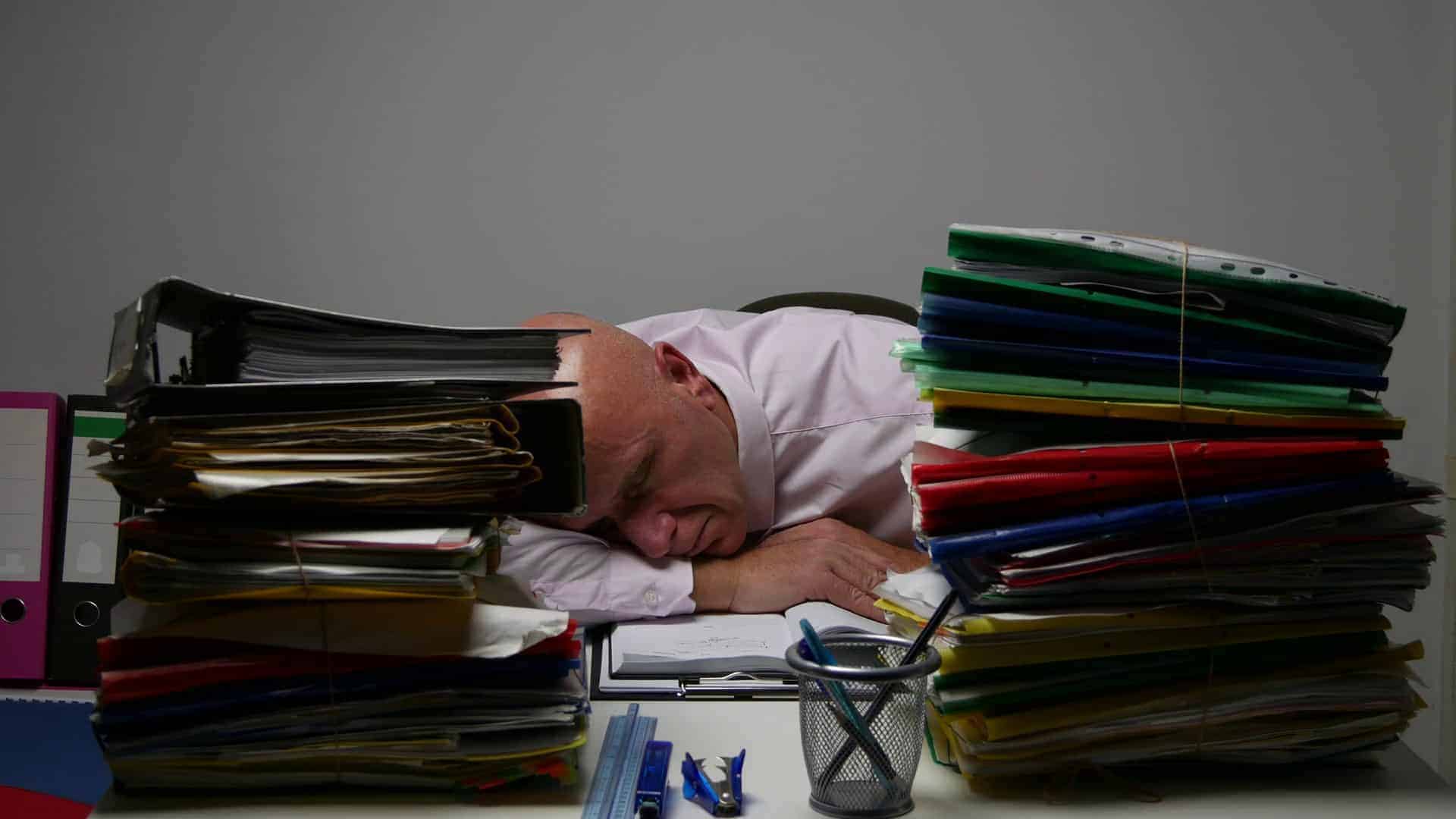
You clock out at five. By five-fifteen, you’re on the couch. By five-thirty, you’re scrolling. By six, the idea of doing anything — cooking, exercising, seeing a friend, working on that project you keep saying you’ll start — feels physically impossible. Not because you’re lazy. Because something between nine and five consumed every unit of energy you had, and the person who arrives home is a depleted version of the person who left that morning.
This is so common that most people have stopped questioning it. They assume it’s normal. That work is supposed to empty you. That the price of earning a living is having nothing left to spend on living. But it’s not inevitable. It’s a pattern, and patterns can be understood and changed.
The Drain Isn’t Physical. It’s Decision-Based.
Unless you do manual labor, your job probably doesn’t exhaust you physically. It exhausts you cognitively. Every decision you make during the day — from the strategic (should we launch this feature?) to the trivial (should I reply to this email now or later?) — draws from the same finite pool of mental energy.
Psychologists call this decision fatigue. By late afternoon, the pool is low. Not empty — but low enough that every remaining decision feels disproportionately heavy. What to eat for dinner, a question that would have taken three seconds at 10 a.m., becomes an existential crisis at 6 p.m. Not because the decision got harder. Because you got emptier.
This is why the evening couch-collapse isn’t a character flaw. It’s a cognitive state. Your brain has made hundreds of decisions and it’s rationing what’s left. The path of least resistance — couch, phone, screen — wins because it requires zero decisions. And your brain, desperate for recovery, chooses the option that asks the least of it.
The Problem With Passive Recovery
Here’s the counterintuitive part: the couch doesn’t actually recover you. Scrolling doesn’t restore energy. Binge-watching doesn’t recharge the battery. These activities feel restorative because they’re easy, but they’re actually neutral at best and draining at worst.
Research on post-work recovery consistently distinguishes between passive rest and active recovery. Passive rest — lying on the couch consuming content — doesn’t replenish cognitive resources. It just stops the bleeding. Active recovery — exercise, social connection, creative activities, time outdoors — actually restores the specific psychological resources that work depleted.
A 2014 study in the Journal of Occupational Health Psychology found that people who engaged in physical activity after work reported significantly higher levels of wellbeing and lower levels of fatigue the following morning compared to those who spent their evenings on passive leisure. Not because exercise isn’t tiring. Because it uses different resources than work does, and in the process, allows the work-depleted ones to recover.
The Transition Ritual
The most effective change you can make isn’t adding something to your evening. It’s inserting a boundary between work and not-work. A transition ritual — something that signals to your brain that the work day is over and a different mode is beginning.
This can be almost anything. A ten-minute walk immediately after work. Changing clothes. A short meditation. Making a cup of tea with no screens. The specific activity matters less than the consistency. Your brain needs a pattern it can recognize as the off-ramp from work mode, and without one, work mode bleeds into evening mode, and you spend two hours on the couch still mentally processing the email you didn’t send and the meeting that went sideways.
The walk is the easiest and most effective option. It combines movement (which helps metabolize stress hormones like cortisol), a change of environment (which signals novelty to the brain), and a natural time boundary (ten to fifteen minutes, clearly defined). If you do nothing else from this article, add a post-work walk. The ROI is absurd.
Pre-Decide Your Evening
If decision fatigue is what empties you, the solution is to remove decisions from the evening. Not all of them. Just the ones that derail you.
Decide what you’re eating for dinner before noon, when your decision-making capacity is high. Decide in the morning whether today is a gym day, a social day, or a rest day. Lay out your workout clothes before you leave for work. Text the friend you want to see before 3 p.m., while you still have the energy to initiate.
Each pre-decision you make during the day removes a barrier from the evening. You arrive home and the question isn’t “what should I do?” — which your depleted brain will always answer with “nothing” — but “I’m doing this thing I already decided on.” The activation energy drops dramatically when the decision is already made.
Protect the First Thirty Minutes
The first thirty minutes after arriving home are the hinge of your entire evening. If you collapse onto the couch and pick up your phone, the evening is over. The inertia is too strong. You’ll stay there until bedtime, wondering where the hours went.
If you do literally anything active in those first thirty minutes — change clothes and go for a walk, start cooking, do fifteen minutes of stretching, call someone — the evening opens up. Movement begets movement. Action begets action. The first activity generates enough energy and momentum to carry you into a second, and the second into a third.
The trick is to never sit down first. Walk through the door and immediately do the next thing, whatever you pre-decided it would be. Sitting down is the trap. Your body reads it as permission to stop, and once it stops, restarting requires more energy than you have.
The Energy Audit
Not all work days drain you equally. Some days you come home with energy to spare. Others you come home empty. The difference isn’t random. It correlates with specific conditions that you can identify and, to some degree, control.
Track it for two weeks. At the end of each work day, rate your energy on a scale of one to ten. Then note what happened: how many meetings you had, whether you ate lunch, how much uninterrupted focus time you got, whether you dealt with conflict, whether you spent time outdoors. After two weeks, patterns will emerge. Maybe meetings drain you disproportionately. Maybe skipping lunch costs you the entire evening. Maybe the days with a midday walk produce dramatically better evenings.
Once you see the patterns, you can intervene. Move the energy-draining meetings to mornings when you have more capacity. Protect lunch. Block thirty minutes for a walk. These aren’t lifestyle luxuries. They’re investments in your after-work self — the person who wants to cook dinner, see friends, and work on things that matter.
You Deserve More Than Recovery Mode
The saddest version of adult life is the one where weekdays are endured and weekends are recovery. Where Monday through Friday is a sustained effort to survive, and Saturday and Sunday are spent gathering enough energy to do it again. That’s not a life. That’s a survival loop.
You deserve evenings that feel like yours. Hours after five that contain something other than screen-mediated numbness. A version of yourself at 7 p.m. that still has the capacity to enjoy being alive.
That version exists. It’s not hiding behind a productivity hack or a motivational quote. It’s hiding behind a post-work walk, a pre-decided dinner, and the discipline to not sit down for the first thirty minutes after you walk through the door. Small changes. Unglamorous changes. Changes that compound, night after night, into an evening life that feels like it belongs to you.