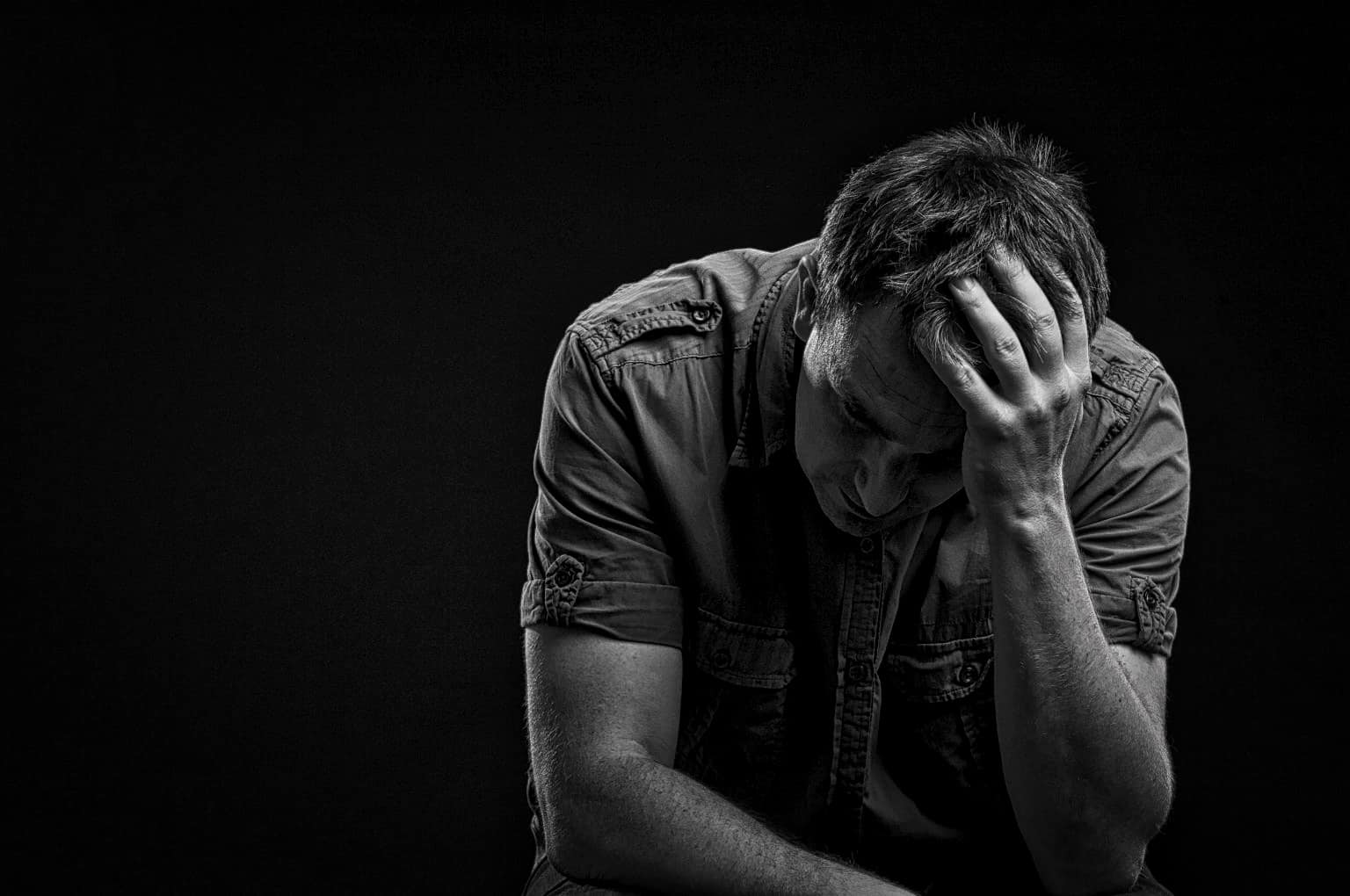
The internet is full of advice about “overcoming” anxiety, as if it’s a wall you climb once and never see again. It’s not. For most people who experience it, anxiety is a recurring weather pattern — sometimes a storm, sometimes a light drizzle, sometimes a clear sky with clouds on the horizon. It comes, it goes, it comes back.
The goal isn’t to eliminate it. That’s not realistic for most people, and framing it that way sets you up for failure the moment anxiety returns. The goal is to understand it well enough to stop being controlled by it — to feel the anxiety and act anyway, to recognize the pattern without being hijacked by it, to coexist with an uncomfortable tenant rather than burning the house down trying to evict them.
What Anxiety Actually Is
Anxiety is your brain’s threat-detection system running on a setting that’s too sensitive for your actual circumstances. It’s an alarm system that fires when there’s no fire — or when the fire is a work email, a social event, or an uncertain future rather than a genuine danger.
The physical sensations are real: elevated heart rate, shallow breathing, muscle tension, the knot in your stomach, the constriction in your chest. These aren’t imaginary. They’re the physiological output of a stress response that evolved to help you survive predators and now activates when you think about your to-do list. Your body doesn’t distinguish between a bear and a deadline. It just sees threat and responds.
Understanding this mechanism doesn’t make the sensations disappear. But it reframes them from “something is wrong with me” to “my alarm system is miscalibrated.” The first interpretation adds shame to anxiety. The second offers a path forward.
The Avoidance Trap
Anxiety’s most effective weapon is avoidance. The anxious brain says: this situation might produce discomfort, so don’t enter it. And every time you comply — skipping the social event, dodging the conversation, cancelling the plan — the anxiety gets stronger, because compliance teaches your brain that the threat was real.
This is the trap. Avoidance feels like safety. It’s actually training. Every time you avoid something because of anxiety, you’re training your brain to be more anxious about that thing next time. The relief is immediate and real. The long-term cost is a shrinking life — fewer experiences, fewer connections, fewer opportunities, all sacrificed to avoid a feeling that, if you’d pushed through it, would have peaked in about fifteen minutes and then subsided.
The clinical term for the opposite of avoidance is exposure. It sounds scary because it is scary. But the principle is simple: approach the thing you’re afraid of, in controlled and gradual doses, and your brain learns — slowly, through repeated experience — that the threat is manageable. Not absent. Manageable. That distinction is enough.
The Body-First Approach
When anxiety is high, reasoning doesn’t work. You can’t think your way out of a panic response any more than you can think your way out of a racing heartbeat. The thinking brain (prefrontal cortex) is partially offline. The threat brain (amygdala) has taken control. Trying to rationalize with yourself in this state is like arguing with someone who isn’t listening.
Start with the body. Extended exhale breathing — inhale for four counts, exhale for six to eight — activates the parasympathetic nervous system and physically slows the stress response. It’s not a cure. It’s a circuit-breaker. It brings the prefrontal cortex back online enough that you can start making decisions again.
Cold water on your face triggers the dive reflex, which lowers heart rate. A brisk walk changes your biochemistry within minutes. Pressing your feet into the floor and describing five things you can see is a grounding technique that pulls attention out of the anxious spiral and back into the present moment, where — almost always — nothing dangerous is actually happening.
These interventions sound too simple to work. They work anyway. Not because anxiety is simple, but because the body responds to physical inputs faster than to mental arguments.
The Stories Your Anxiety Tells
Anxiety is a gifted storyteller. It specializes in a genre called “worst-case scenario” — vivid, detailed, emotionally compelling narratives about catastrophes that haven’t happened. You send an email and your brain writes a screenplay about getting fired. You feel a pain in your chest and your brain produces a documentary about heart disease. Your partner is quiet and your brain scripts the breakup conversation.
These stories feel true because they’re accompanied by genuine physical sensations. Your body is producing the anxiety as if the story were happening, and the physical evidence makes the narrative seem credible. But a story with a soundtrack isn’t the same as a fact. The email doesn’t mean you’re getting fired. The chest pain might be muscular. Your partner might just be tired.
The practice — and it does take practice — is to notice the story, label it as a story, and ask: what evidence do I actually have? Not what feels true. What is documented, observable, verifiable. Almost always, the evidence is thinner than the story, and the gap between the two is anxiety’s workspace.
When to Get Professional Help
Self-management strategies are valuable for mild to moderate anxiety. They are not a substitute for professional help when anxiety is severe, persistent, or significantly interfering with your ability to function.
If your anxiety prevents you from sleeping regularly, maintaining relationships, performing at work, or leaving your home; if you’re experiencing panic attacks that feel like medical emergencies; if you’re using alcohol, substances, or other coping mechanisms to manage the anxiety — these are signals that self-help has reached its ceiling and a professional can offer tools, perspectives, and potentially treatments that go beyond what you can do alone.
Cognitive Behavioral Therapy (CBT) is one of the most evidence-based treatments for anxiety, and it works by systematically addressing the thought patterns and avoidance behaviors that maintain the condition. For some people, medication is appropriate and effective, either as a bridge during acute periods or as a longer-term support. There is no shame in either option. Anxiety is not a character flaw. It’s a condition, and conditions respond to treatment.
Living With, Not Against
The most important shift in managing anxiety is the shift from fighting it to coexisting with it. Fighting anxiety puts you at war with your own nervous system — a war you can’t win, because the system you’re fighting is the same system you need to function.
Coexistence looks different. It looks like feeling the anxiety before a social event and going anyway. Noticing the worry spiral starting and choosing not to follow it. Acknowledging the physical sensations without adding the story. Saying, “I feel anxious right now, and I’m going to do the thing I planned to do,” rather than, “I feel anxious, so I need to stop everything until the feeling passes.”
The feeling might not pass before you act. That’s okay. You don’t need the anxiety to be gone. You need it to be irrelevant to your decision. And every time you act despite it, you prove to yourself — and to the nervous system that’s running the alarm — that the alarm was wrong. Not about the feeling. About the danger. The feeling was real. The danger wasn’t.
That’s the foundation. Feel it. Name it. Act anyway. Repeat until the alarm starts to trust you.