I’ll be honest: Ireland wasn’t high on my list. I had the standard preconceptions — green fields, Guinness, and rain. A lot of rain. It felt like a polite destination, the kind of place your parents visit and describe as “lovely.” Not exactly the word that gets a twenty-something to book a flight.
I was wrong. Spectacularly, embarrassingly wrong. Ireland turned out to be one of the most affecting places I’ve ever visited — not because it was exotic or extreme, but because it was genuine in a way that most tourist destinations have lost. The landscape hits harder than photographs prepare you for. The people are disarmingly warm without being performative. And the culture has a depth and self-awareness that makes most “tourist-friendly” countries feel like theme parks by comparison.
Here’s what I wish someone had told me before I went.
The Landscape Will Ruin Other Landscapes for You
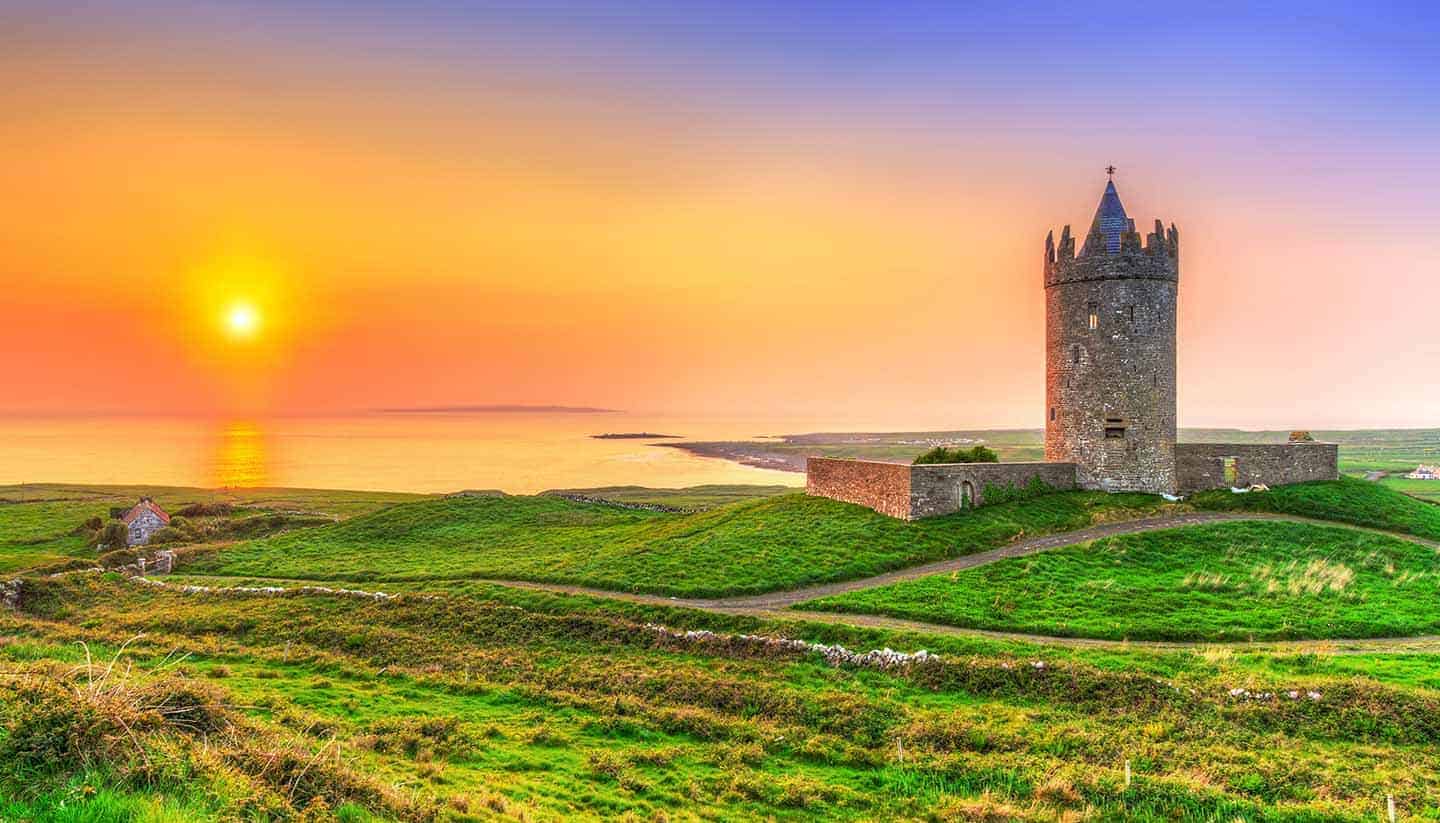
There’s a specific quality to Irish light that no camera captures and no one warns you about. It’s something about the latitude, the moisture in the air, the way clouds move across the sky fast enough that the light changes every few minutes. You’ll be driving a narrow road along the coast and the entire palette of the world will shift three times in ten minutes — grey to gold to impossible green and back again. It’s like watching someone adjust the saturation on reality in real time.
The Cliffs of Moher are the headline, and they deserve it. Seven hundred feet of vertical rock face dropping into the Atlantic with a violence that you can feel in your chest. But the Cliffs are what everyone sees. The coastline that stretches in either direction — the Burren, the Ring of Kerry, the Wild Atlantic Way — is where the quieter, deeper beauty lives. Rocky limestone landscapes that look lunar. Beaches with no one on them. Harbors where the boats look like they haven’t moved in a century.
And then there’s the green. You think you know what green looks like until you drive through Connemara in late spring. There are shades of green in the west of Ireland that don’t have names. Fields so vivid they look artificial, layered against stone walls that are older than most nations, under a sky that can’t decide whether to rain or shine and splits the difference by doing both simultaneously.
The People Are the Best Part (And I Don’t Say That About Every Country)
Irish hospitality is qualitatively different from hospitality in most other countries. In a lot of tourist destinations, friendliness is transactional — you’re a customer, they’re being nice because you’re spending money, and both of you know it. In Ireland, the warmth feels organic. People talk to you because they like talking. The bartender asks where you’re from because he’s genuinely curious, not because he’s working for a tip (tipping culture is different here).
The conversational culture is extraordinary. The Irish have elevated casual conversation to something approaching an art form. There’s a rhythm to it — story leads to tangent leads to joke leads to another story — that can keep you sitting in a pub for four hours without checking your phone once. And the humor runs through everything. Dry, quick, self-deprecating, and delivered with a deadpan that makes you unsure whether they’re serious for just long enough to make the punchline land harder.
Ask for directions and you’ll get a five-minute narrative that includes three landmarks, a personal anecdote, and an editorial comment on the road conditions. It’s inefficient. It’s also the most charming thing you’ll experience in a country full of charming things.
The Pub Is Not a Bar
This distinction matters. An Irish pub is not a place to get drunk. It’s a social institution — the living room of the community, the place where news travels, where music happens, where strangers become acquaintances and acquaintances become friends at a speed that would take months in most other cultures.
Traditional Irish music sessions — “trad sessions” — happen spontaneously in pubs across the country. Three or four musicians sit in a corner with fiddles, tin whistles, and a bodán, and the music starts. It’s not a performance. There’s no stage, no setlist, no cover charge. It’s people playing music because that’s what you do on a Tuesday in Ireland. And the sound fills the room in a way that live music in a concert venue never quite achieves, because the room is small, the musicians are close, and nobody is looking at a screen.
If you visit Ireland and don’t spend at least one evening in a proper pub with live music, you’ve missed the country’s heartbeat.
Dublin Is Good. Outside Dublin Is Better.
Dublin is a fine city. It has Temple Bar (which locals avoid), excellent restaurants, and enough literary history to justify a week of walking tours. But Dublin is also the most like everywhere else. It’s the international version of Ireland — polished, accessible, and slightly generic in the way that all successful capitals become.
The real Ireland is west. Galway is the city that captures the Irish character most honestly — small, colorful, musical, and built around a relationship with the Atlantic that you can feel in the wind off the Spanish Arch. The Aran Islands, reachable by ferry from Galway, are what Ireland was before tourism arrived: stone walls, Gaelic spoken as a first language, and a raw beauty that borders on severe.
Dingle, on the southwest coast, is a town so impossibly picturesque that it feels staged. It isn’t. It’s a working fishing village with world-class seafood, a famous resident dolphin (Fungie, now deceased but still beloved), and a surrounding peninsula that contains some of the most dramatic coastal scenery in Europe.
Rent a car. Drive the narrow roads. Get lost on purpose. The Ireland that matters most is the Ireland between the destinations.
What Nobody Mentions
The weather is real. Rain is not occasional — it’s structural. You will get wet. Pack layers, a waterproof jacket, and the understanding that “four seasons in one day” is not a joke but a literal description of most Irish Tuesdays. The trade-off is that the rain is what produces the green, and the green is why you came.
It’s not cheap. Ireland, particularly Dublin, is expensive by European standards. Accommodation, food, and drinks cost more than you’d expect. Budget accordingly, and prioritize spending outside Dublin where prices drop and value increases.
Driving is on the left. The roads are narrow. Some of them, particularly in the west, are barely wider than your rental car. This is initially terrifying and eventually one of the best parts of the trip, because the narrow roads force you to slow down, and slowing down is how you see Ireland properly.
Why It Stays With You
Most countries you visit, you enjoy and then move on. Ireland lingers. Months later, you’ll hear a piece of music and be back in that pub in Galway. You’ll see a photograph of a coastline and feel, physically, the wind off the Cliffs of Moher. You’ll meet someone warm and funny and think, for a second, that they might be Irish.
The country gets under your skin because it’s not trying to impress you. It’s just being itself — beautiful, complicated, self-aware, and profoundly human in a way that most tourist experiences have been optimized out of. Ireland hasn’t been optimized. It hasn’t been smoothed or polished or focus-grouped for international visitors. It’s still rough, still real, still itself.
That’s why it stays with you. Not the castles. Not the cliffs. The realness. In a world of curated experiences, Ireland is the rarest thing: a place that is exactly what it appears to be.