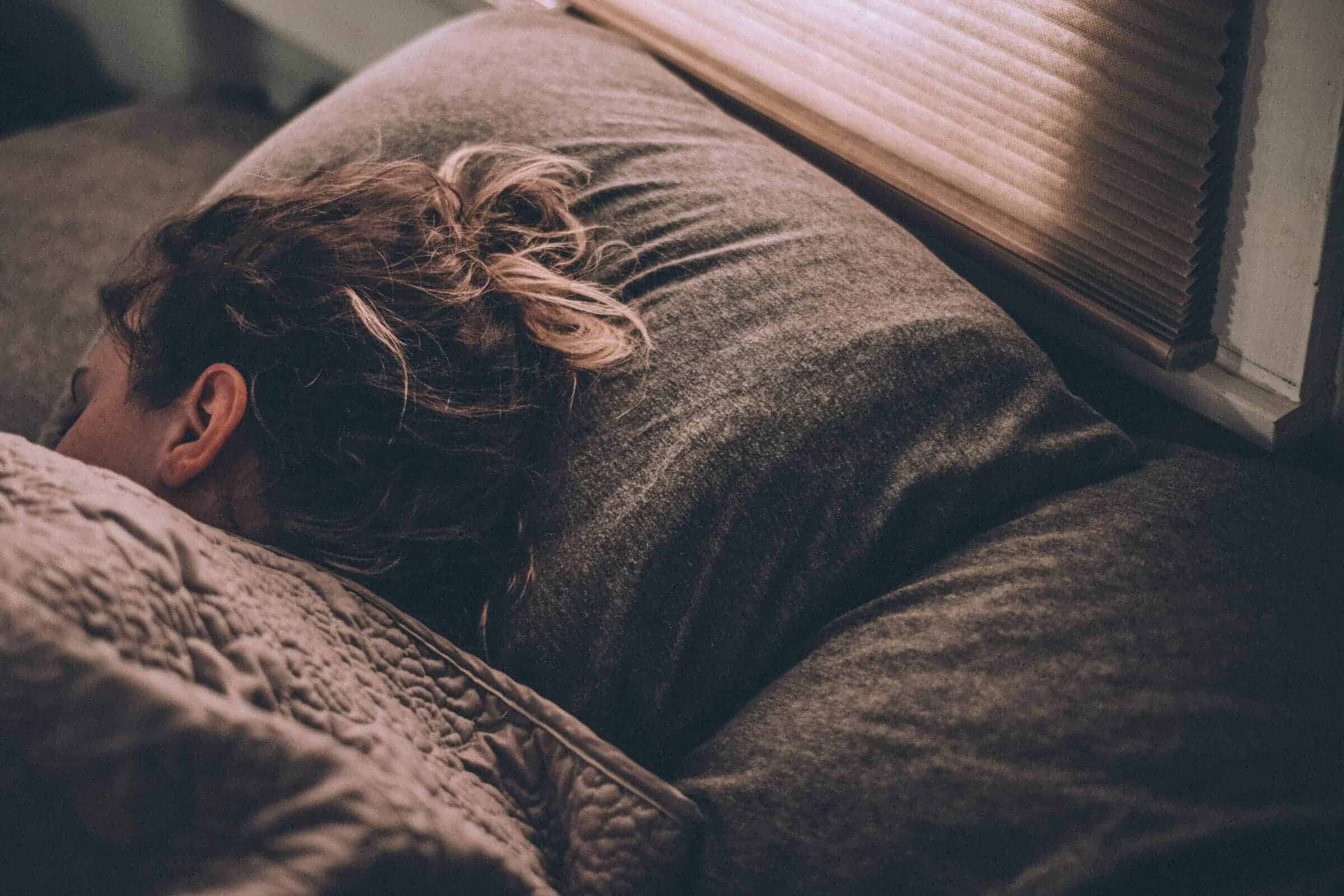
You know the feeling. You’ve been in bed for forty-five minutes. Your body is exhausted. Your mind is running a marathon. You’re rehearsing tomorrow’s meeting, replaying today’s conversation, calculating something financial, remembering something embarrassing from 2014, and somehow simultaneously aware that every minute you spend not sleeping is a minute less of sleep, which only makes the not-sleeping worse.
Sleep problems have become so common that they’ve stopped registering as problems. “I didn’t sleep well” is small talk, not a health complaint. But chronic poor sleep isn’t a minor inconvenience. It’s a slow-motion health crisis that affects your mood, your cognition, your immune system, your cardiovascular health, your weight, your decision-making, your relationships, and your ability to handle stress. If sleep were a drug, and it produced effects this broad, it would be the most important pharmaceutical ever developed.
It’s not a drug. It’s free. And you’re probably doing it wrong.
The Architecture of Sleep
Sleep isn’t one state. It’s a cycle of four stages that repeats roughly every ninety minutes through the night. Stages 1 and 2 are light sleep — the transition phase where your body cools, your heart rate slows, and your brain begins to disengage from the waking world. Stage 3 is deep sleep (slow-wave sleep) — the physically restorative phase where growth hormone is released, tissue repair happens, and your immune system does its maintenance work. Stage 4 is REM sleep — the mentally restorative phase where your brain consolidates memories, processes emotions, and dreams.
You need all four stages in sufficient quantity. Most people get decent light sleep. Where the modern lifestyle fails is deep sleep and REM sleep, both of which are suppressed by alcohol, late-night screen use, caffeine consumed too late in the day, and irregular sleep schedules. You can spend eight hours in bed and wake up exhausted if the architecture of those eight hours was wrong — too much light sleep, not enough deep and REM.
The Non-Negotiable: Consistency
If you absorb only one thing from this article, let it be this: a consistent sleep schedule matters more than any other sleep variable. More than your mattress. More than your pillow. More than melatonin, magnesium, or any supplement on the shelf.
Your circadian rhythm — the internal clock that governs when you feel sleepy and when you feel alert — runs on consistency. It needs to predict when sleep is coming in order to prepare for it. When you go to bed at 10:30 on weeknights and 1:30 on weekends, you’re asking your internal clock to handle a three-hour time zone shift every week. That’s the physiological equivalent of flying from Calgary to São Paulo every Friday night and back every Monday morning. Your body can’t adapt to that, and the result is fragmented, low-quality sleep that leaves you tired regardless of how many hours you logged.
Pick a bedtime. Pick a wake time. Hold them seven days a week, including weekends. Within two to three weeks, you’ll notice that falling asleep gets easier, waking up gets less painful, and the quality of your sleep — not just the quantity — improves measurably.
Light Is the Master Switch
Your circadian rhythm is calibrated primarily by light. Bright light, especially blue-spectrum light, suppresses melatonin and tells your brain it’s daytime. Absence of light triggers melatonin release and tells your brain it’s time to prepare for sleep.
Two habits will leverage this mechanism more effectively than anything else. First: get bright light exposure within thirty minutes of waking. Go outside. Even ten minutes of natural morning light — even on a cloudy day — sets your circadian clock for the day, improves alertness, and primes your body to feel sleepy at the right time that evening. Second: dim your environment two hours before bed. Reduce overhead lighting. Switch screens to night mode or, better, stop using them entirely. Your bedroom should be dark — not “pretty dark.” Dark. Blackout curtains, tape over LED indicators, phone face-down in another room dark.
These two light adjustments — bright morning, dim evening — will do more for your sleep quality than any pill, app, or podcast.
The Caffeine Half-Life Problem
Caffeine has a half-life of roughly five to seven hours. This means if you drink a coffee at 3 p.m., half of that caffeine is still circulating in your system at 8 to 10 p.m. You might fall asleep fine — caffeine doesn’t always prevent sleep onset — but it will suppress your deep sleep stages, which means you wake up feeling unrested without knowing why.
This is the hidden saboteur for millions of people. They sleep seven or eight hours, feel tired, blame the mattress or stress, and never suspect the afternoon espresso that’s silently degrading the architecture of their sleep every single night.
The rule is simple: no caffeine after noon. If you’re particularly sensitive, cut it off at 10 a.m. Yes, this is aggressive. Yes, the afternoon without coffee feels different at first. And yes, the improvement in your sleep quality will be noticeable within days.
Alcohol Is Not a Sleep Aid
Alcohol makes you drowsy. It does not make you sleep well. There’s a crucial difference.
Alcohol is a sedative, and sedation is not the same as sleep. It suppresses REM sleep, fragments your sleep architecture, and causes you to wake more frequently in the second half of the night as your body metabolizes the alcohol and rebounds into a state of elevated alertness. The person who has two glasses of wine “to help them sleep” is getting worse sleep than the person who had nothing — they just don’t realize it because they fell asleep faster.
If you enjoy a drink in the evening, allow at least three hours between your last drink and bedtime. This gives your body time to metabolize most of the alcohol before you enter the sleep stages that alcohol most disrupts.
Your Bedroom Is a Sleep Machine (Or It Should Be)
Three variables: cool, dark, quiet. Your body needs to drop its core temperature by about one degree Celsius to initiate sleep, which is why a cool room (around 18°C / 65°F) promotes faster sleep onset. Darkness signals your brain that it’s safe to produce melatonin. And noise — even noise you’re “used to” — causes micro-arousals that fragment your sleep without waking you fully. You don’t remember them, but your brain does, and they erode the restorative quality of every cycle.
Invest in blackout curtains. Run a fan or white noise machine if your environment is noisy. Keep the room cool. Remove your phone. These are boring, unsexy interventions. They’re also the most effective sleep improvements you can make for under fifty dollars.
When Nothing Works
If you’ve done all of the above consistently for a month and you’re still struggling, the problem may not be behavioral. Chronic insomnia, sleep apnea, restless leg syndrome, and other sleep disorders affect a significant portion of the adult population, and many people live with them undiagnosed for years because they assume poor sleep is normal.
It’s not normal. Feeling consistently unrefreshed after a full night’s sleep is a medical signal worth investigating. Talk to your doctor. Get a sleep study if recommended. The solution might be something no lifestyle change can address — and finding it could change the way every single day of your life feels.
Sleep is not a luxury. It’s not a productivity hack. It’s the foundation on which every other aspect of your health, your performance, and your happiness is built. Treat it that way.